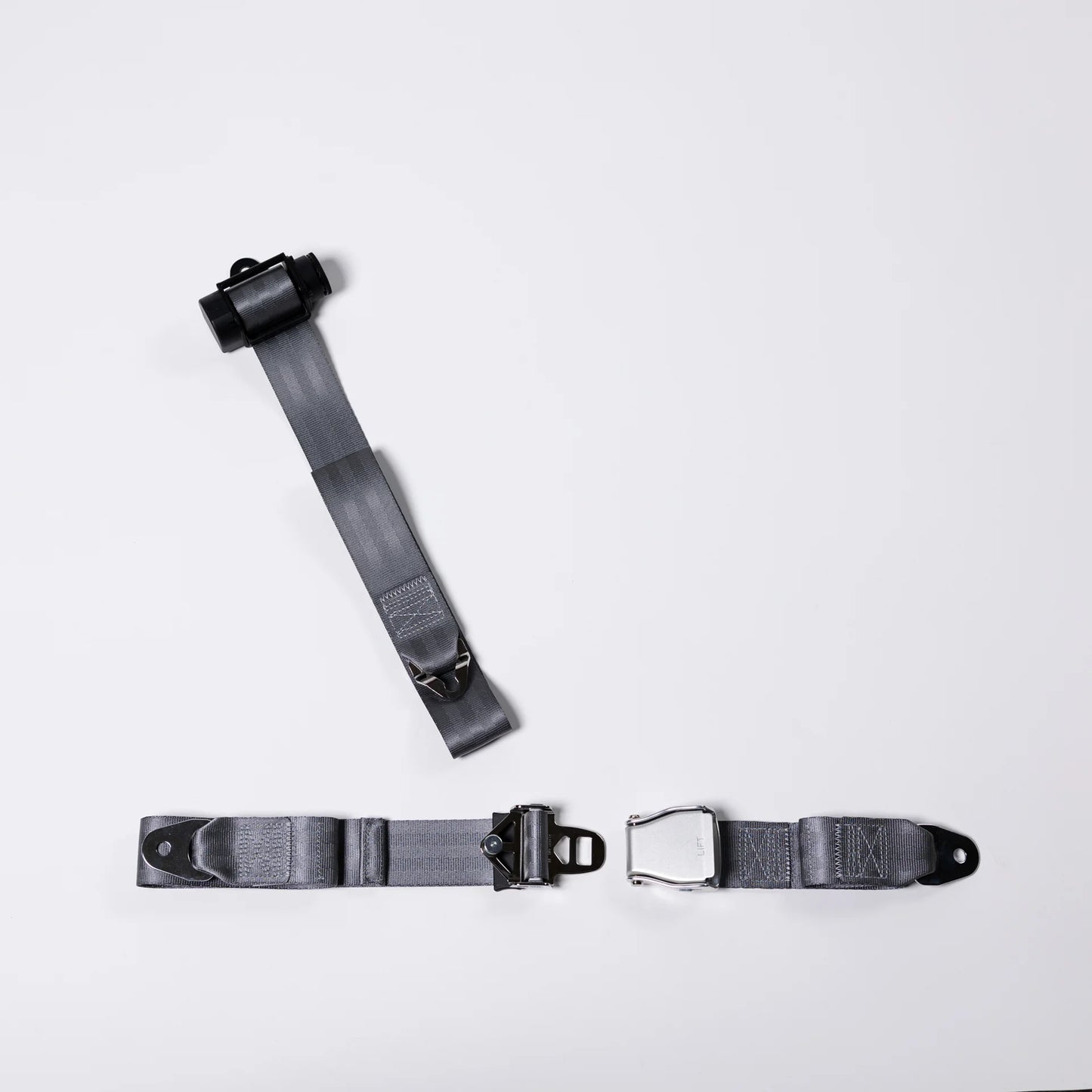
Walk through any general aviation restraint catalog and you’ll find three distinct restraint families side by side: 2-point lap belts, 3-point systems that add a diagonal shoulder strap, and 4-point harnesses with a Y or H-shaped upper body configuration. They are not interchangeable, and picking one over another isn’t purely a comfort decision. Each category protects against a different failure mode, and each has a different answer to the question of whether it’s legal to install on your aircraft.
This guide breaks down what each restraint type actually does in an impact, which aircraft can and can’t add shoulder restraints, and how to decide which category is right for your seat.
Key Takeaways
- A 2-point lap belt restrains your lower body only. It does nothing to prevent your upper body and head from striking the panel, yoke, or the seat in front of you.
- A 3-point restraint (lap belt plus a single diagonal shoulder strap) restrains the upper body along one line across the torso, similar to an automotive belt.
- A 4-point harness (lap belt plus two shoulder straps, in a Y or H pattern) distributes crash loads across both shoulders and is the standard for aerobatic and high-performance applications.
- Adding shoulder restraints to an aircraft that only has lap belts is a modification, not a replacement, and it generally requires an STC, PMA installation, or Minor Change approval, not just a parts order.
Why This Isn’t Just a Comfort Question
Lap-belt-only aircraft were common through the 1970s because the certification standards of the era didn’t require upper body restraint. The FAA has since required shoulder harnesses in front seats of newly certificated aircraft beginning July 18, 1978, and in all seats of small aircraft beginning December 12, 1986. Aircraft certificated before those dates can still be legally flown with lap belts only, but “legal to keep flying” and “the safest available option” are two different things.
NTSB accident investigations have repeatedly found that occupants wearing only a lap belt in an otherwise survivable impact suffered head and upper-body injuries that a shoulder harness would likely have prevented. That gap is why so many owners retrofit shoulder harnesses even when their aircraft was never required to have them.
What a 2-Point Lap Belt Actually Restrains
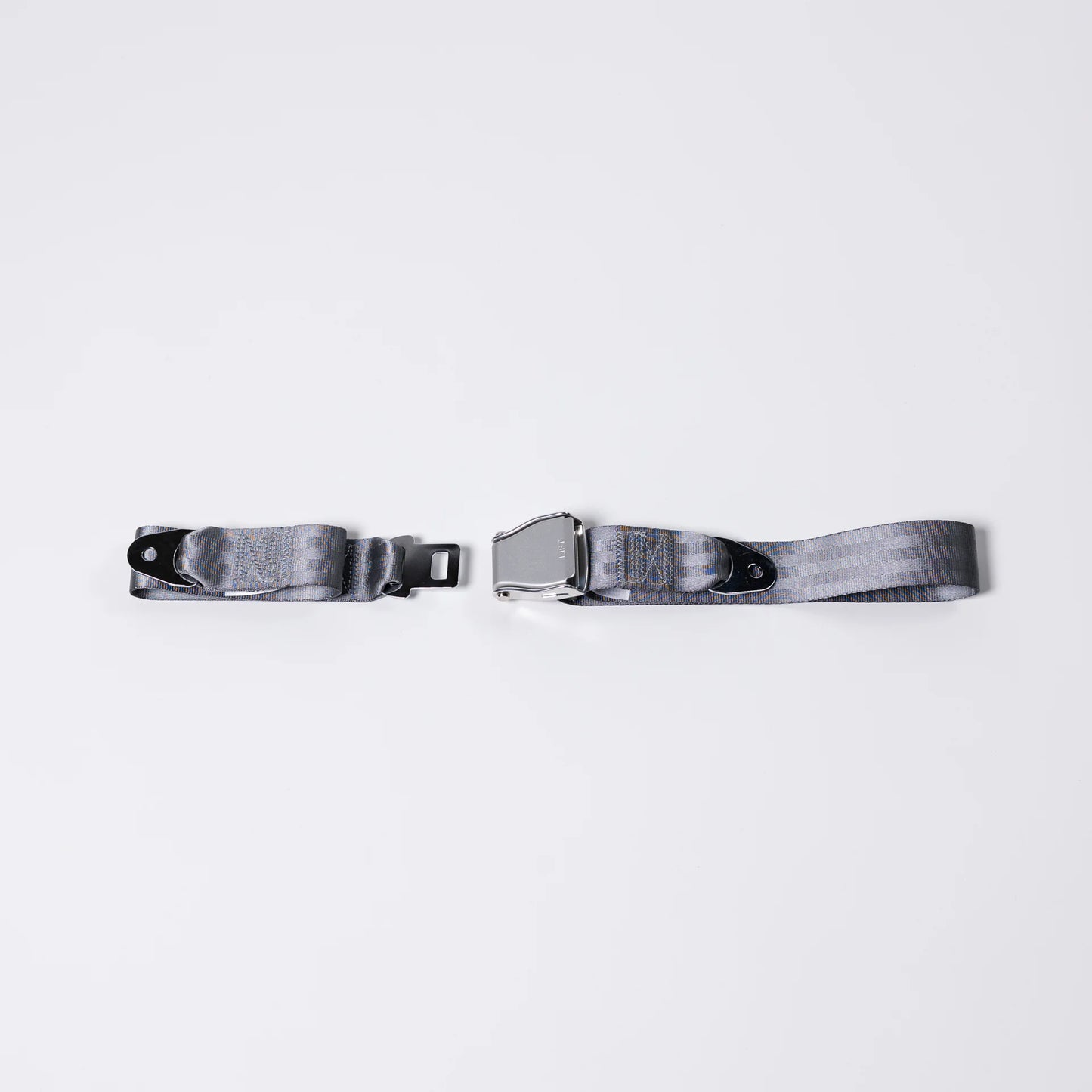
A 2-point lap belt anchors at two points, one on each side of the seat, and holds the pelvis in place during deceleration. It does this job well. What it cannot do is stop forward motion of the torso, which means in anything beyond a light impact, the upper body pivots forward over the belt. This is sometimes called “submarining” or a “jackknife” motion, and it’s the mechanism behind many of the head and chest injuries seen in lap-belt-only accidents.
Lap belts remain standard equipment in some rear seats and in aircraft where shoulder anchor points genuinely don’t exist and can’t be added without major structural work. Where they’re your only option, correct fit and TSO-approved condition matter even more, since the belt is doing all of the restraint work alone.
What a 3-Point Restraint Adds
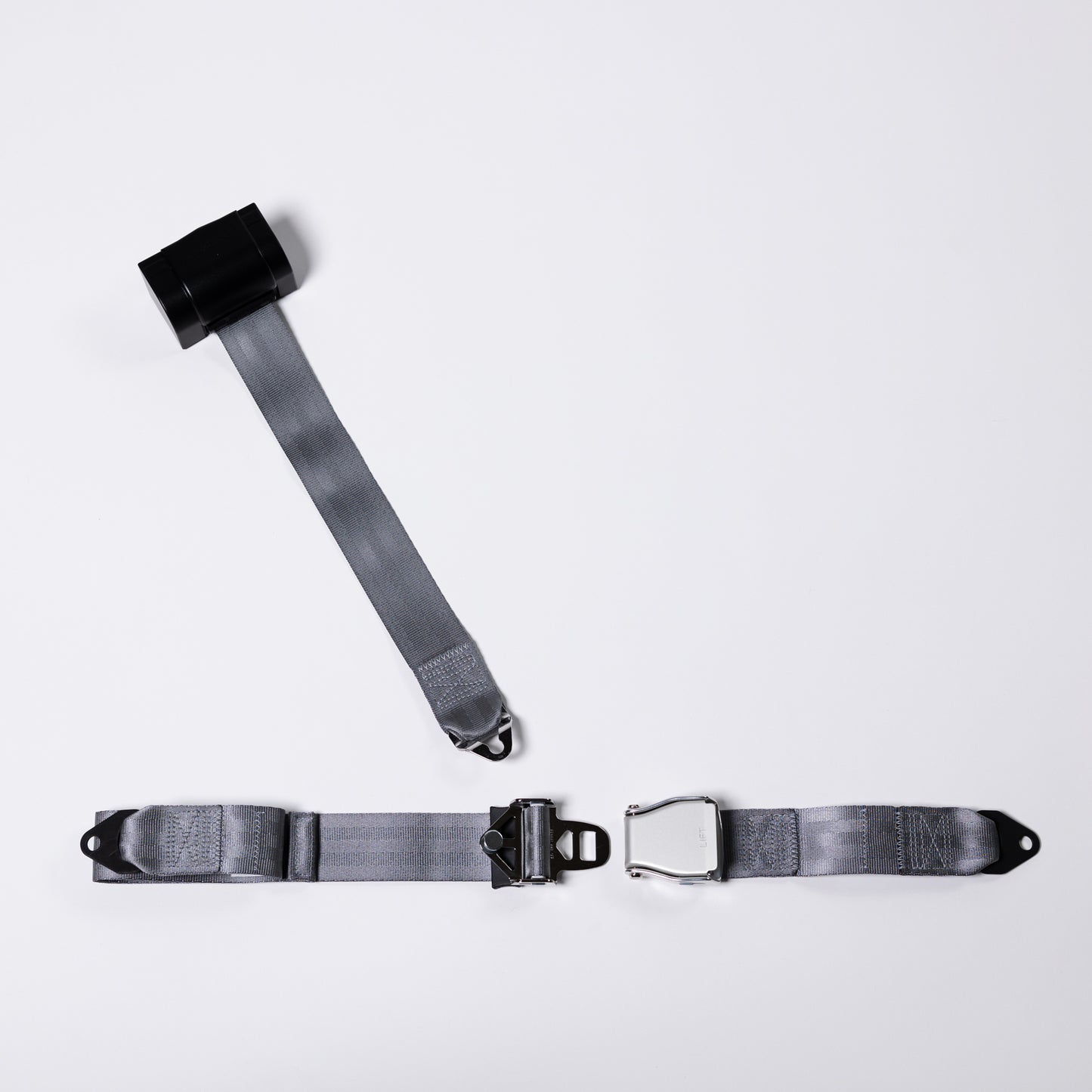
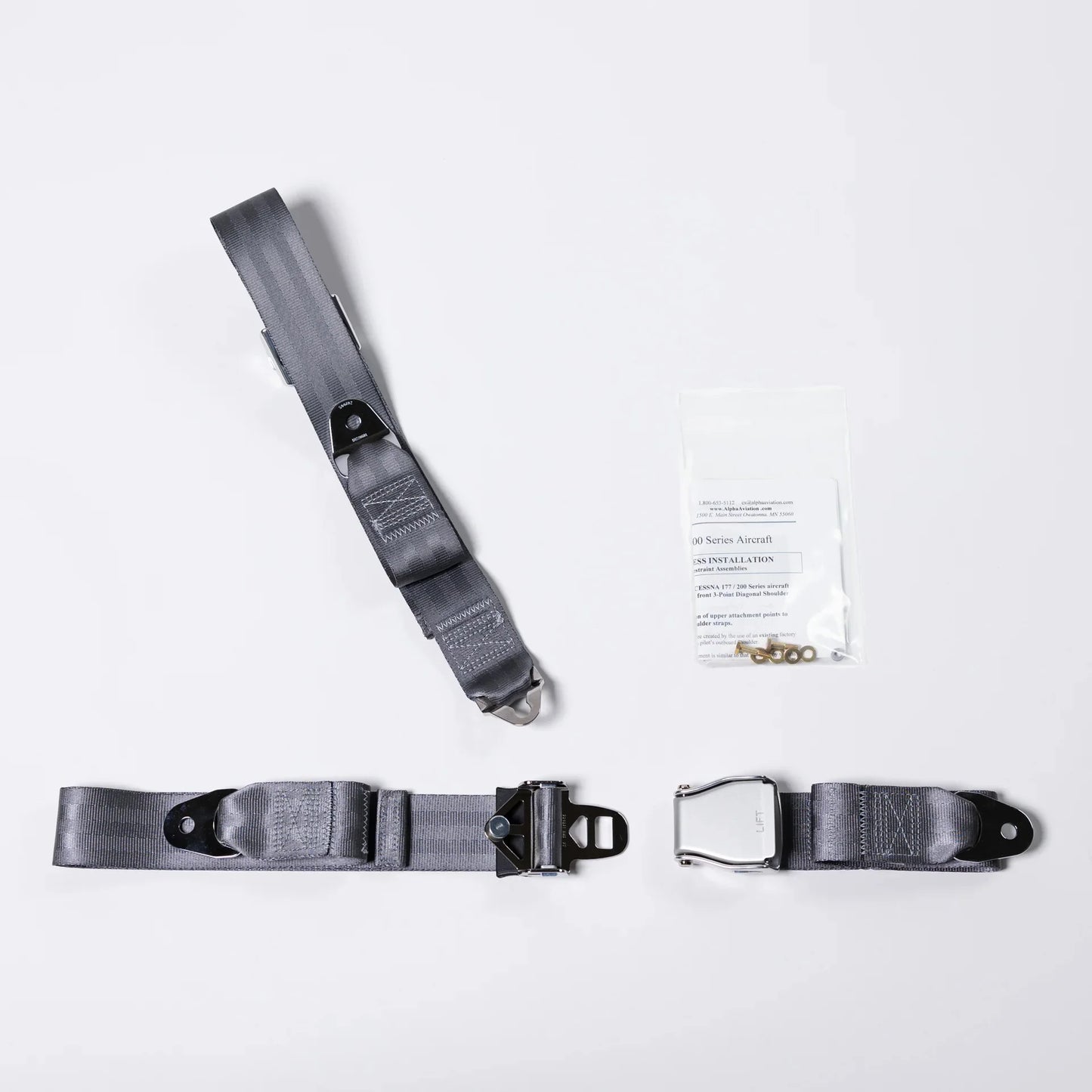
A 3-point restraint combines a lap belt with a single diagonal shoulder strap, anchored above and behind one shoulder. This is the same basic geometry as a car seatbelt, and it works the same way: it restrains the torso along one diagonal line, which significantly reduces forward pivot compared to a lap belt alone.
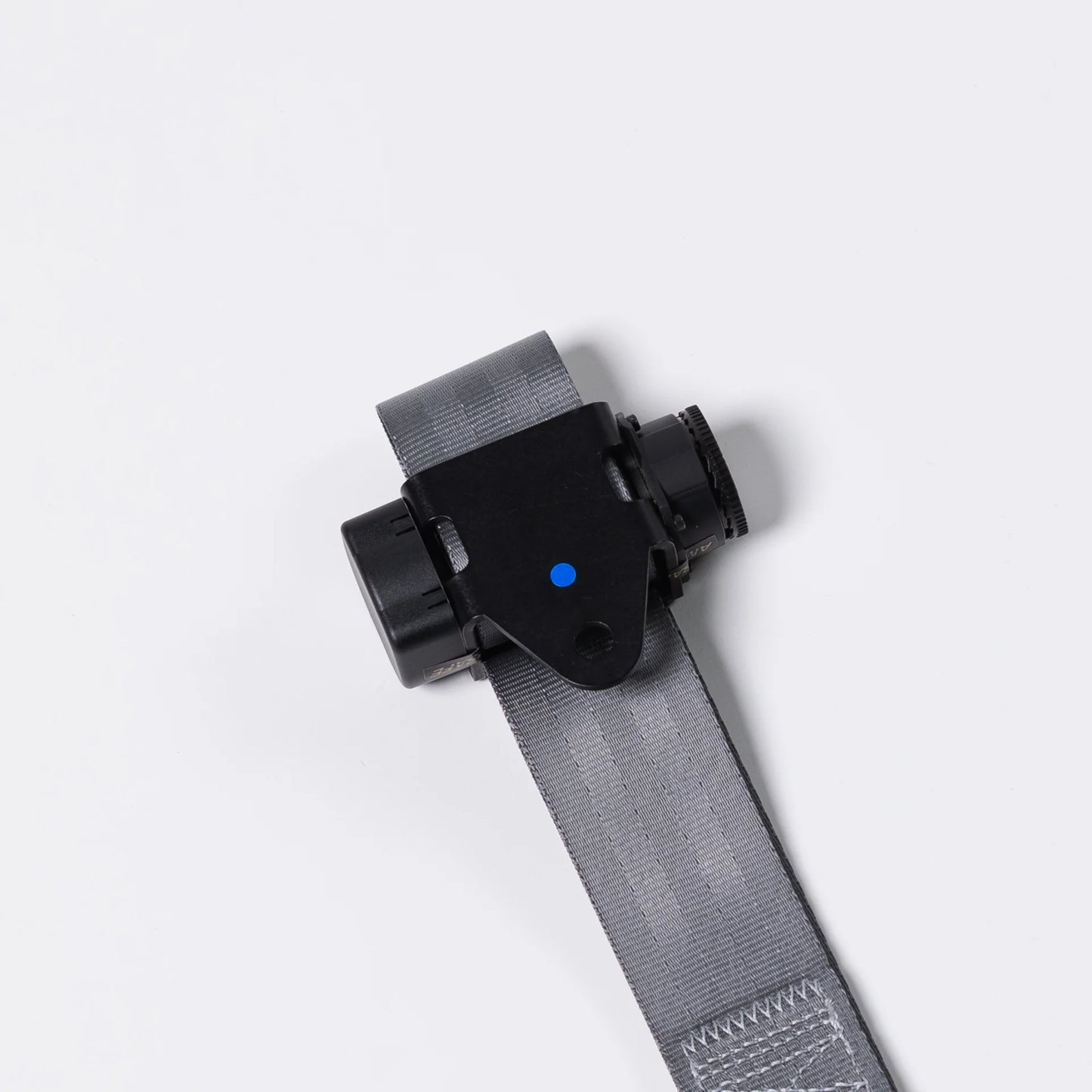
Most of Alpha Aviation’s inertial reel and fixed strap restraint systems fall into this category. An inertial reel version allows normal movement in the cockpit and locks under sudden deceleration, while a fixed strap version stays at a set length. Either configuration is a substantial safety improvement over lap belt only, and it’s the most common retrofit path for aircraft that originally had lap belts alone.
What a 4-Point Harness Adds
A 4-point harness uses two shoulder straps instead of one, meeting either at a single lap belt buckle (Y-configuration) or crossing the shoulders independently before joining at the lap (H-configuration). Because the load is split across both shoulders instead of one diagonal line, a 4-point harness manages higher impact loads with less asymmetric loading on the body, which is why it’s the standard in aerobatic, competition, and many experimental and light-sport applications.
The tradeoff is fit and installation complexity. A 4-point harness needs two upper anchor points instead of one, and in aircraft not originally designed for it, that typically means a more involved installation than a 3-point retrofit.
Which Category Applies to Your Aircraft
Start with what your aircraft already has. If it has an approved shoulder harness attachment point of any kind, front or rear, upgrading from a fixed strap to an inertial reel, or from a single-diagonal 3-point to a 4-point, is often possible without new structural approval, since you’re using existing hardware and geometry.
If your aircraft has lap belts only and no existing shoulder attachment points, adding a 3-point or 4-point system is a modification. That typically means an STC, a PMA-approved installation, or in some cases a Minor Change installation, depending on your aircraft’s existing structure. Our companion guide, Do You Need an STC for Aircraft Shoulder Harness Installation?, walks through exactly how to determine which path applies.
Your aircraft’s Illustrated Parts Catalog (IPC) is the definitive source for what your specific serial number was originally equipped with. Some manufacturers added shoulder harness attachment points earlier than regulations required, which means even some aircraft built before the 1978 and 1986 mandates may already have approved hardware in place.
Frequently Asked Questions
Is it legal to fly with only a lap belt if my aircraft was originally certificated that way?
Yes. If your aircraft’s original type certificate only required lap belts and no shoulder harness modification has been made, flying with lap belts only remains legal. It is not, however, the safest available configuration, and many owners choose to upgrade even when it isn’t required.
Can I upgrade from a 3-point to a 4-point harness without an STC?
If your aircraft already has approved shoulder harness attachment points, adding a second shoulder strap in most cases uses the same certification basis as the existing installation, since you’re not creating new attachment geometry. Confirm with your mechanic and your aircraft’s IPC before ordering, since specific requirements vary by aircraft.
Do 4-point harnesses fit in the same seats as 3-point restraints?
Not always. A 4-point harness requires two upper anchor points spaced apart on the airframe, rather than one, so seat and cabin geometry that accommodates a 3-point restraint doesn’t automatically accommodate a 4-point one. Check your aircraft’s specific hardware requirements before assuming a direct swap is possible.
Matching the Restraint to the Risk
The honest answer for most general aviation owners is that a 3-point restraint delivers the large majority of the safety benefit over a lap belt, with a simpler and usually less expensive installation than a 4-point system. A 4-point harness earns its complexity in aerobatic, high-performance, and competition applications where the loads and maneuvering envelope justify it.
If you’re not sure which category your aircraft can legally accept, that’s the question to answer first. Everything else, comfort, color, buckle style, is a distant second.
Ready to Upgrade Your Restraint System?
Alpha Aviation manufactures 2-point, 3-point, and 4-point restraint systems for a wide range of general aviation aircraft, including Cessna, Piper, Mooney, Beechcraft, and Ercoupe/Alon models, in both fixed strap and inertial reel configurations.
Browse restraint systems or contact Alpha Aviation to confirm which restraint category is right for your aircraft.